
Get a Quote
Tell us about your home and how we can help.
Why Choose Southwick?
- Almost 50 years of experience
- Largest capacity truck in the Lincoln area
- Certified with Nebraska DEQ
- A raised standard of excellence and professionalism
Weather and season permitting, a percolation test is required to determine what type of sewage system will be allowed. The test will indicate if water is able to move through the soil. The more water is able to move through a field, the smaller the seepage field that is required.
If the soil is too dense, then the percolation test will fail and a septic system will not be able to be installed. In this case a lagoon would be installed.
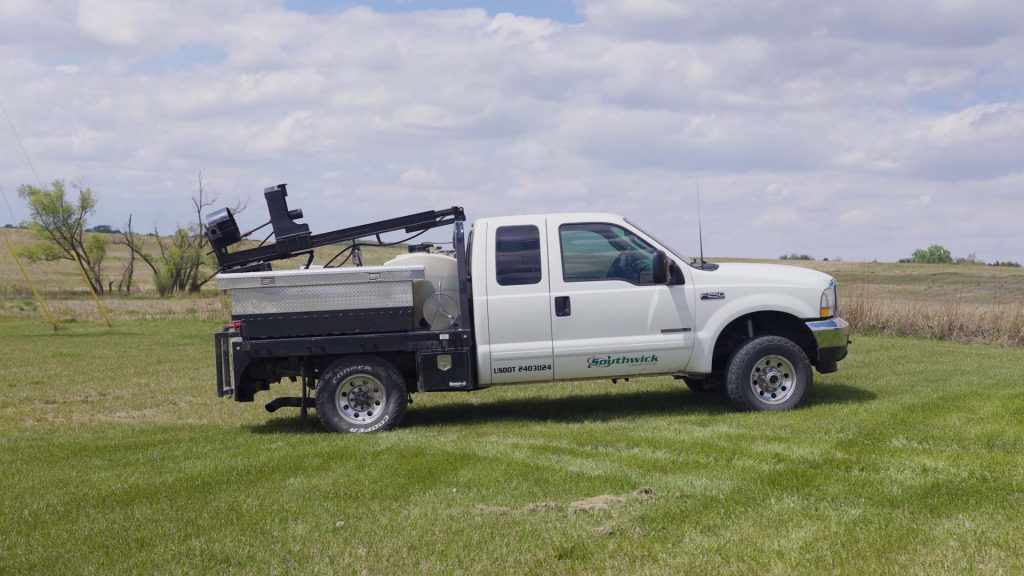
What about using a percolation test?
The reliability of percolation tests varies with season and weather conditions, and generally only indicates if water will move through the soil. Percolation tests cannot be performed if the ground is frozen and are unreliable in drought periods. During wet periods, a margin of safety is obtained in the test. Soil map data is used to verify percolation test results.
How is soil map data used?
Lancaster County was soil-typed in the early 1970s by soil scientists from the U.S. Department of Agriculture Soil Conservation Service. Rough estimate percolation rates were derived for each soil type. When soil type data is superimposed over an aerial photograph, an idea of the suitability of a given parcel of land can be determined. Soil characteristics must be verified in the field by a percolation test.