Get a Quote
Tell us about your home and how we can help.
Why Choose Southwick?
- Almost 50 years of experience
- Largest capacity truck in the Lincoln area
- Certified with Nebraska DEQ
- A raised standard of excellence and professionalism
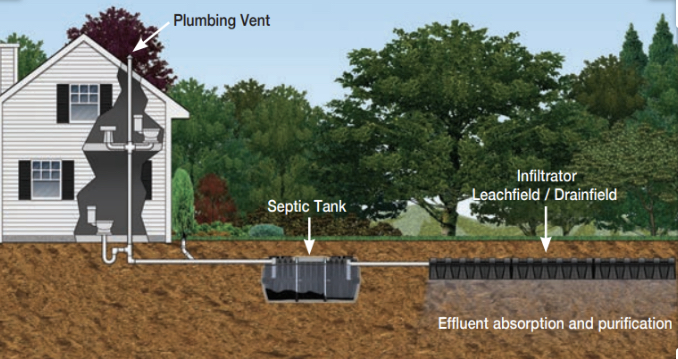
If you live in the country (or are building outside of the city limits), your home requires its own wastewater treatment system, otherwise known as a septic system. The diagram below shows the components of a septic system, which is basically a tank and a drainfield. All the water leaving your home goes first to the septic tank and then slowly to the drainfield. Any solids in the water (toilet paper, garbage disposal remnants, or waste) get trapped in the tank. The drainfield then slowly and consistently absorbs all the water coming out of the tank. Because so much solid material gets trapped within the tank, it must be pumped every 3 to 5 years. If the solids are not removed regularly, they build up and eventually seep out to the lateral field and can clog up the soil. In order for your septic system to work properly, the soil must act like a sponge that constantly soaks up water. Overwhelming the sponge with solid matter will stop that absorption.
The soil plays a huge role in how your septic system works. Therefore, prior to installing a septic system, your installer must take a soil percolation test. This helps determine if the ground is suitable for a conventional septic system. (There are other types of wastewater systems, but the most common and most desired is the conventional septic system.) Currently, what most installers use for their lateral field product is a bundled expanded polystyrene synthetic aggregate lateral. See the picture below.
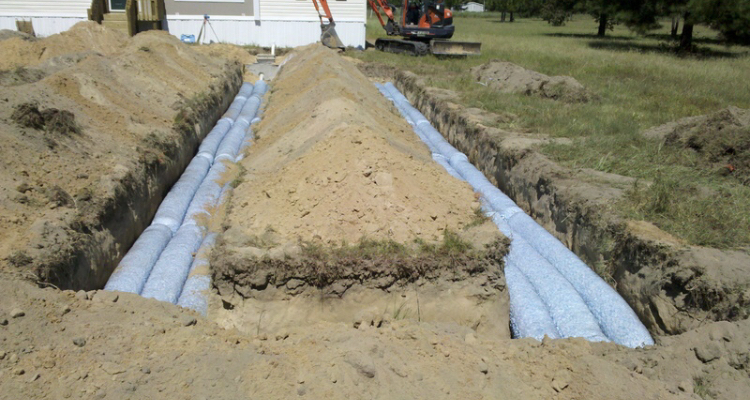
Here is another picture of this type of lateral to give you a better view of this product. Basically, there is some piping down the middle with holes in it, surrounded by the synthetic aggregate (which actually looks like packaging peanuts). The piping allows the water to flow through it, and the aggregate provides the extra space underground for water to flow to.
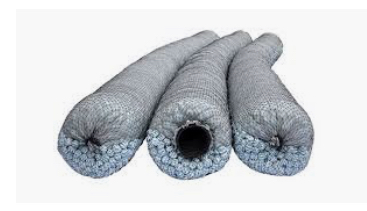
Most septic installers currently use this type of lateral product. Understand that the point of a lateral field is to create space underground and work with the existing soil to absorb water effectively. These packaging peanuts do just that.
Finally, because we are working with the soil, there are certain concessions we have to make with Mother Nature. One such concession happens during installation. We cannot install a septic system when the ground is wet. We need to install when the soil is dry. Digging in wet soil will cause smearing and make the soil seal up when we need to keep it porous and open. This can get frustrating for both installer and customer during rainy seasons, as we have shorter windows of opportunity to dig. It is also why we can’t install during the winter months: we can’t work with frozen soil much better than wet soil. Our typical install season is usually between April and November. Every year varies in its rain and snowfall amounts, so we are constantly installing around Mother Nature’s schedule.
But installation isn’t the only area where we have to work around Mother Nature. We also have to be patient after the installation process. Once the system is installed, we have to leave the disturbed soil mounded up around the tank and especially the lateral field. The ground needs to settle around these components as naturally as possible for the best possible final product and the longest-lasting system.
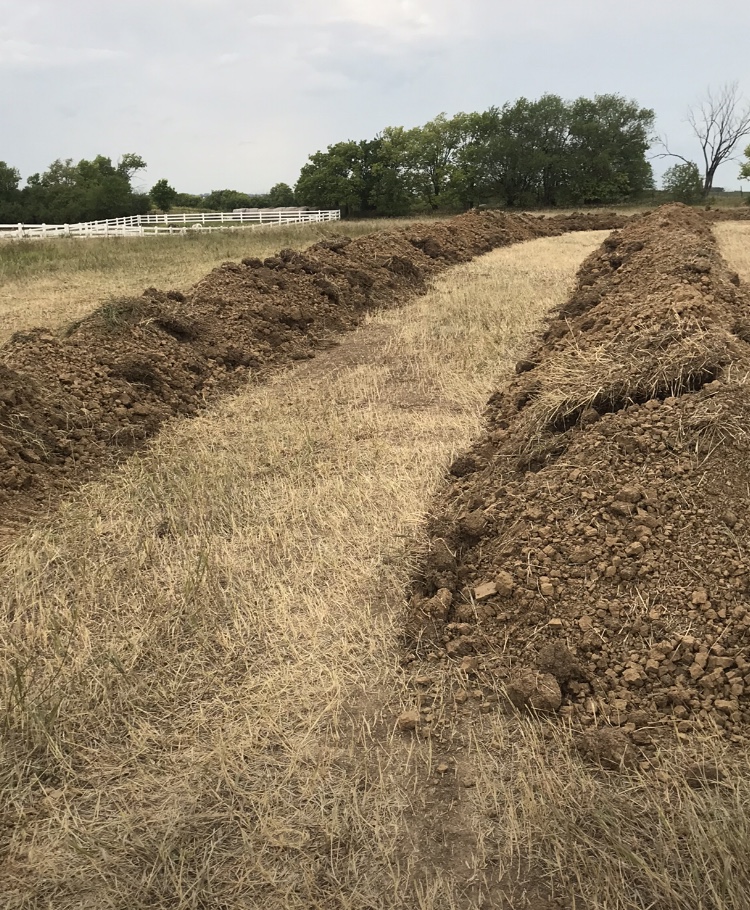
After about 6 months of settling, then the customer can perform the final grade and level off the area, but not allowing plenty of time for the soil to naturally settle can cause premature failure of your septic system.